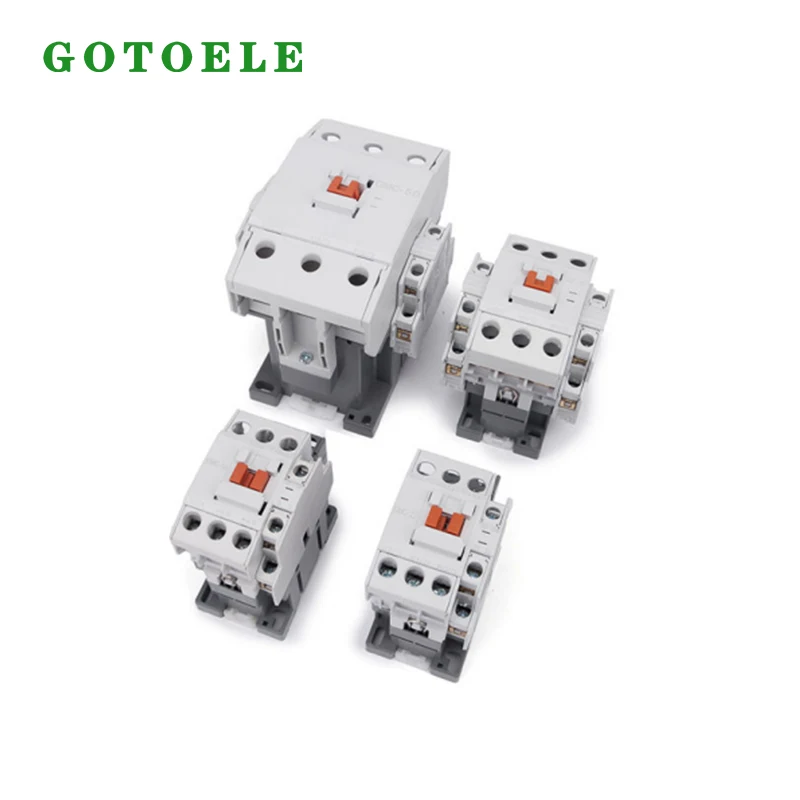
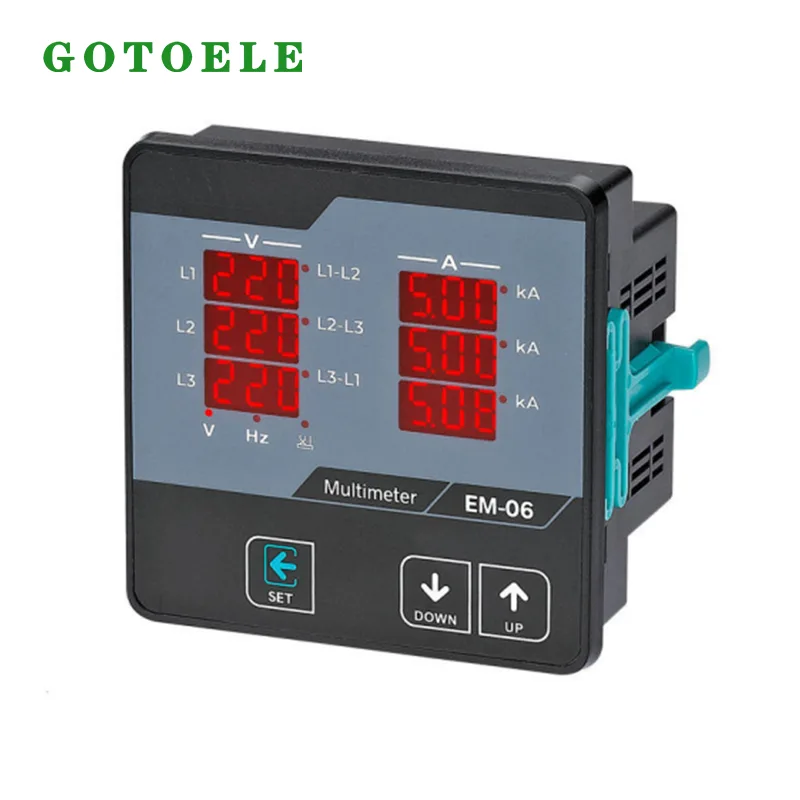
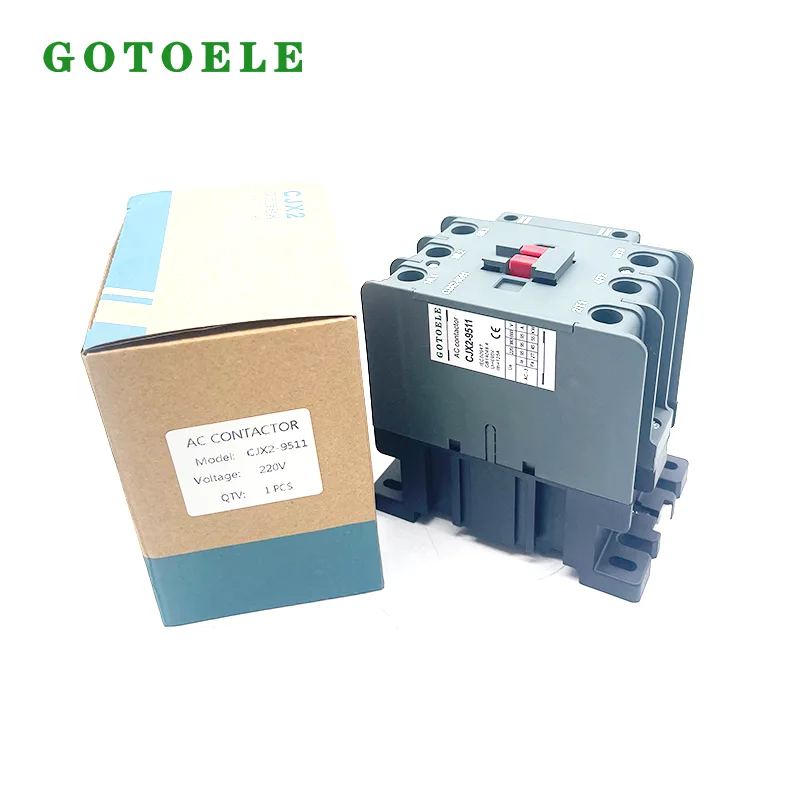
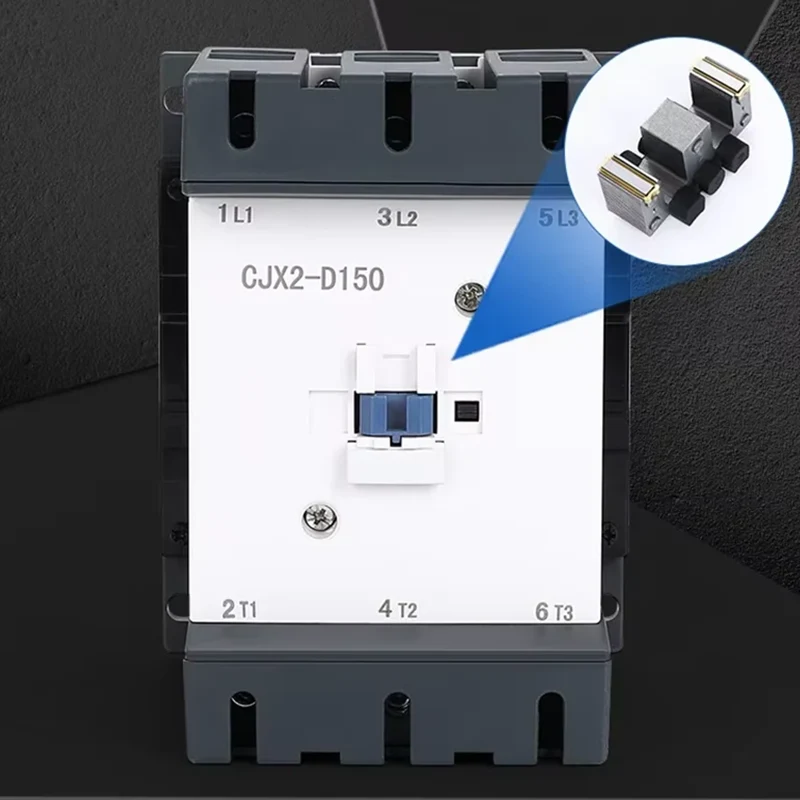
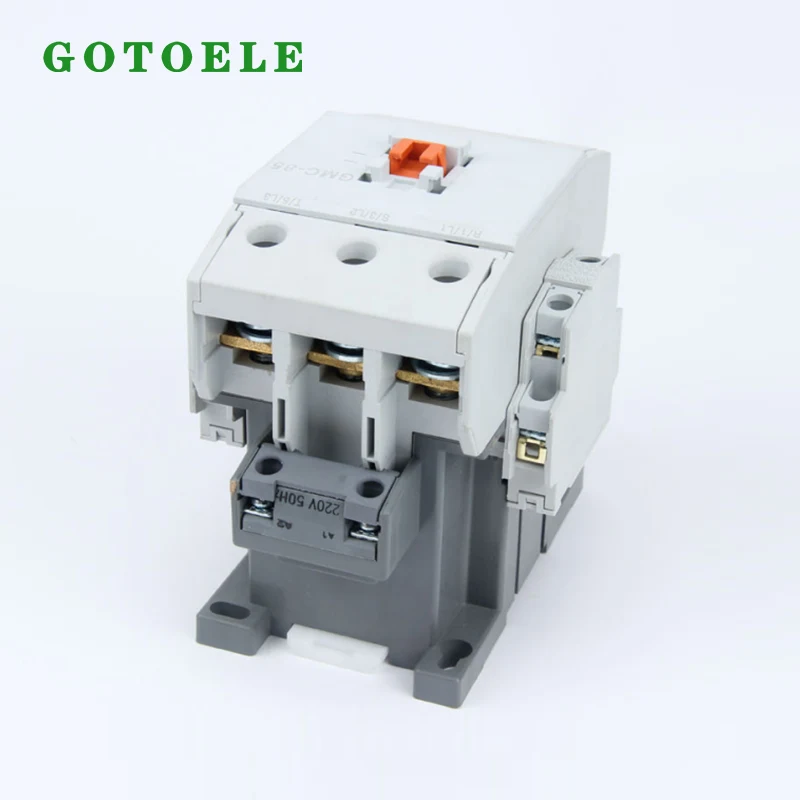
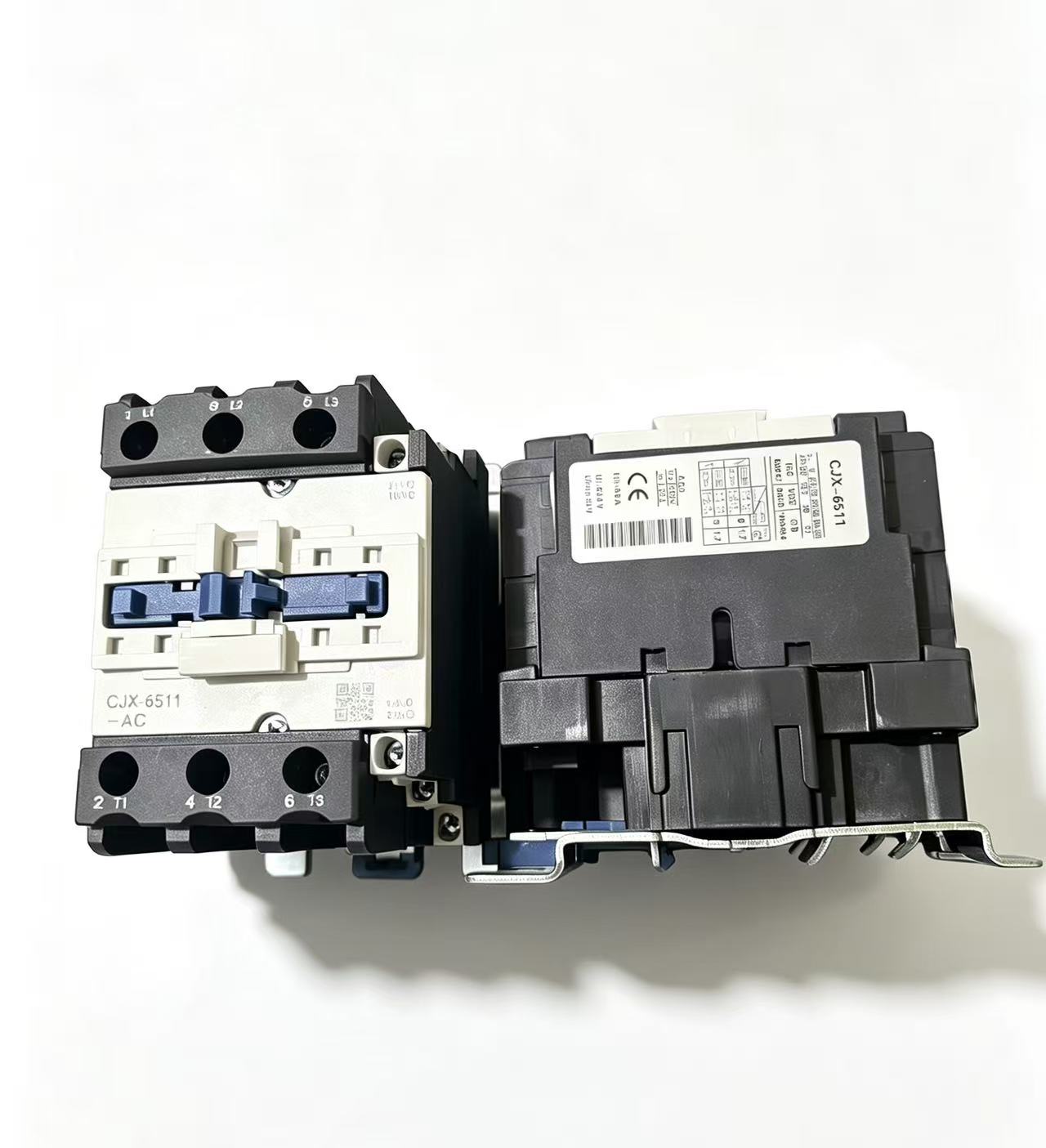
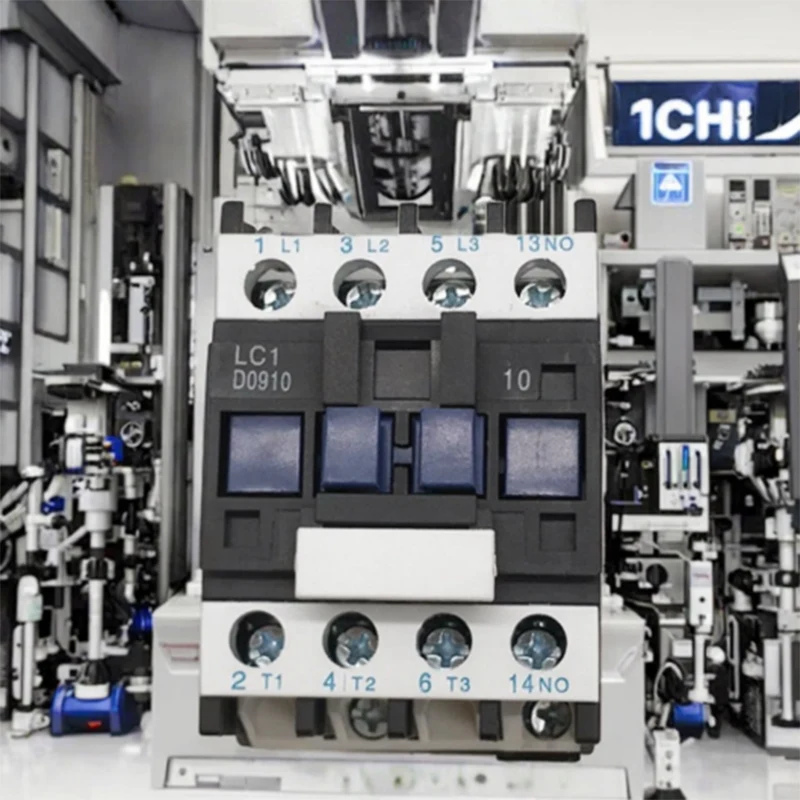
An AC contactor is an automatic switching device that uses electromagnetic force to control the opening and closing of switches. Its core function is to frequently open and close high-power main circuits, while also providing low-voltage protection. The specific principles and functions are as follows:
1. Working principle
Communication contactors are mainly divided into three parts: electromagnetic system (coil, static iron core, dynamic iron core), contact system (main contact, auxiliary contact), and arc extinguishing system. They rely on electromagnetic force and spring elasticity to achieve on/off, and have two working states:
Power on action state: When the attraction coil is energized, the static iron core will generate electromagnetic attraction, which will attract the moving iron core (armature). The connecting rod linked with the armature will drive the contact action - the normally open contact that was originally disconnected will close, and the normally closed contact that was originally closed will open, completing the circuit connection.
Power loss release state: When the coil is powered off, the electromagnetic attraction disappears, and the moving iron core will reset under the elastic force of the reaction spring, and all contacts will return to their initial state - normally open contacts open, normally closed contacts close, and the circuit is cut off.
In order to reduce the vibration and noise caused by the AC magnetic field, a copper short-circuit ring will be embedded on the end face of the static iron core to ensure that there is always an attractive effect between the iron core and the armature, greatly reducing the operating noise. Contactors with a capacity exceeding 10A will be equipped with arc extinguishing devices to quickly extinguish the arc generated when disconnecting the circuit, avoiding contact burns.
2. Core role
AC contactors are suitable for frequent operation and remote control of high-voltage circuits, and their main functions include:
On/off main circuit: It can safely and high-frequency connect and disconnect high current AC main circuits (with a rated current range covering 5A-800A), with a maximum operating frequency of up to 1200 times per hour, far higher than ordinary manual switches.
Remote control: By driving the high current main circuit through a small current control circuit, operators do not need to come into close contact with high-voltage circuits, greatly improving operational safety.
Voltage loss/undervoltage protection: When the power supply voltage is too low or power is cut off, the contactor will automatically disconnect the main circuit. After restoring power supply, it will not start on its own, avoiding equipment damage due to abnormal voltage and preventing accidents from occurring.
Implementing complex control logic: In conjunction with auxiliary contacts, it can be combined with relays and other components to achieve complex circuit functions such as self-locking, interlocking, interlocking, and timing control. It is the core component of industrial automation control systems.
3. Typical application scenarios
The main control objects of AC contactors are various types of electric motors, and they can also be used to control other electrical loads, including electric heaters, lighting equipment, welding machines, capacitor banks, distribution systems, etc. They are widely used in heavy industry, industrial automation and other fields.
We use cookies to offer you a better browsing experience, analyze site traffic and personalize content. By using this site, you agree to our use of cookies. Privacy Policy