Why Is the Electronic Motor Overload Relay Becoming Essential for Reliable Industrial Motor Protection?
In modern industrial automation systems, electric motors are the core driving components of pumps, compressors, fans, conveyors, and production equipment. However, unexpected overloads, phase failures, and locked rotor conditions can cause serious motor damage, production downtime, and unnecessary maintenance costs.
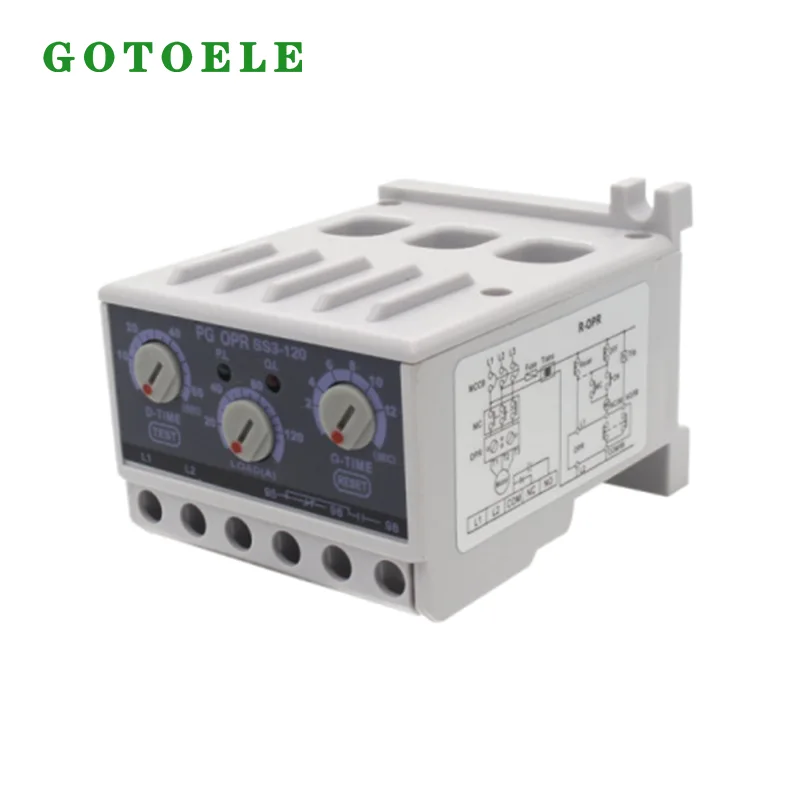
As industries move toward smarter and more reliable electrical control systems, the PG OPR-SS3-120 Electronic Motor Overload Relay provides an advanced solution for protecting motors through accurate current monitoring, fast fault detection, and intelligent protection functions.
What Problems Can Traditional Motor Protection Systems Fail to Solve?
Traditional thermal overload relays rely on thermal elements to detect excessive current. Although widely used, their response accuracy can be affected by ambient temperature changes and long-term operating conditions.
For modern industrial applications requiring higher reliability, electronic overload protection technology offers several advantages, including:
- Higher current measurement accuracy
- Faster overload response
- Reduced influence from environmental temperature
- More flexible adjustment settings
- Improved motor operation monitoring
How Does the PG OPR-SS3-120 Electronic Motor Overload Relay Protect Motors?
The PG OPR-SS3-120 Electronic Motor Overload Relay continuously monitors motor operating current and detects abnormal conditions before they cause permanent equipment failure.
Its main protection functions include:
- Overload Protection: Detects excessive motor current caused by heavy mechanical loads and prevents overheating damage.
- Phase Loss Protection: Identifies phase failure conditions that may lead to uneven current distribution and motor burnout.
- Locked Rotor Protection: Provides protection when the motor shaft cannot rotate normally due to mechanical blockage.
- Overcurrent Monitoring: Helps maintain safe motor operation by detecting abnormal current increases.
Electronic motor protection relays such as the OPR-SS3 series are designed to provide reliable protection for both single-phase and three-phase motors in industrial environments. :contentReference[oaicite:1]{index=1}
Why Is Accurate Current Adjustment Important for Motor Safety?
Every motor has different rated operating conditions. Incorrect protection settings may cause unnecessary shutdowns or fail to protect the motor during abnormal operation.
The PG OPR-SS3-120 supports adjustable current settings, allowing engineers to match the relay protection parameters with the actual motor rated current.
Accurate adjustment helps achieve:
- Reduced motor overheating risk
- Improved equipment service life
- Lower maintenance frequency
- Higher production system stability
What Are the Key Technical Advantages of Electronic Overload Relay Technology?
1. High-Precision Electronic Current Detection
Unlike conventional thermal overload devices, electronic overload relays use current sensing technology to provide more accurate motor protection performance, especially in applications with frequent starting, variable loads, and continuous operation.
2. Fast Fault Identification and LED Indication
Clear fault indication allows operators to quickly identify abnormal conditions and reduce troubleshooting time during equipment maintenance.
3. Compact Design for Industrial Control Panels
The compact structure of electronic overload relays makes them suitable for modern control cabinets where installation space is limited.
4. Flexible Reset and Operation Management
Depending on system requirements, overload relays can support manual reset and remote reset functions, improving maintenance efficiency in automated production environments.
Where Can PG OPR-SS3-120 Electronic Motor Overload Relay Be Applied?
Because of its reliable motor protection capability, the Electronic Motor Overload Relay is widely used in various industrial applications, including:
- Pump Systems: Protects water pumps, chemical pumps, and industrial circulation systems from overload damage.
- HVAC Equipment: Provides protection for fans, compressors, and air handling systems.
- Manufacturing Machinery: Ensures stable operation of conveyors, processing equipment, and automated production lines.
- Industrial Automation Panels: Improves electrical safety and equipment reliability in control systems.
How Should Engineers Select the Right Electronic Motor Overload Relay?
Selecting an appropriate motor protection relay requires consideration of several technical factors:
- Motor rated current and operating voltage
- Single-phase or three-phase motor requirements
- Required protection functions
- Trip characteristics and response time
- Installation method and control cabinet design
What Is the Future Development Trend of Motor Protection Technology?
With the growth of smart factories and industrial automation, motor protection technology is moving toward intelligent monitoring and predictive maintenance.
Future electronic overload relay systems will increasingly integrate:
- Digital communication functions
- Remote monitoring capability
- Real-time operation data analysis
- Integration with industrial control systems
- AI-based predictive maintenance solutions
Conclusion
The PG OPR-SS3-120 Electronic Motor Overload Relay represents the next generation of motor protection technology by combining accurate current monitoring, multiple protection functions, and reliable industrial performance.
For manufacturers, system integrators, and electrical engineers, selecting a high-quality electronic motor overload relay is an important step toward improving equipment safety, reducing downtime, and achieving more efficient industrial operations.
Related News
- how do reliable manufacturing and stable delivery support industrial component procurement.
- What Makes AC Contactor A Series Reliable for Modern Electrical Control Systems?
- GMC-85 AC Magnetic Contactor 3P 135A 45KW 2NO+2NC for Industrial Motor Control
- What Factors Should You Consider When Selecting Pushbutton with Indicator Light?
- What are the principles and functions of communication contactors?
- What are the functions of communication contactors?
Leave me a message